Six Centuries of Heritage
A compact chronicle of the castle's major periods — from noble residence to royal fortress, state prison to protected monument.
Origins
Blackness Castle was established in the 1440s under Sir George Crichton, one of the most powerful men in 15th-century Scotland — Admiral of Scotland, Earl of Caithness, and Sheriff of Linlithgow. He built it as a strategic stronghold near the port serving Linlithgow, Scotland's royal burgh and a major residence of the Scottish Crown.
In 1453, King James II compelled Crichton to surrender Blackness to the Crown. From that moment the castle entered royal service, and its story became inseparable from the turbulent story of the Scottish kingdom itself — through reformations, sieges, imprisonments, and wars across nearly six centuries.
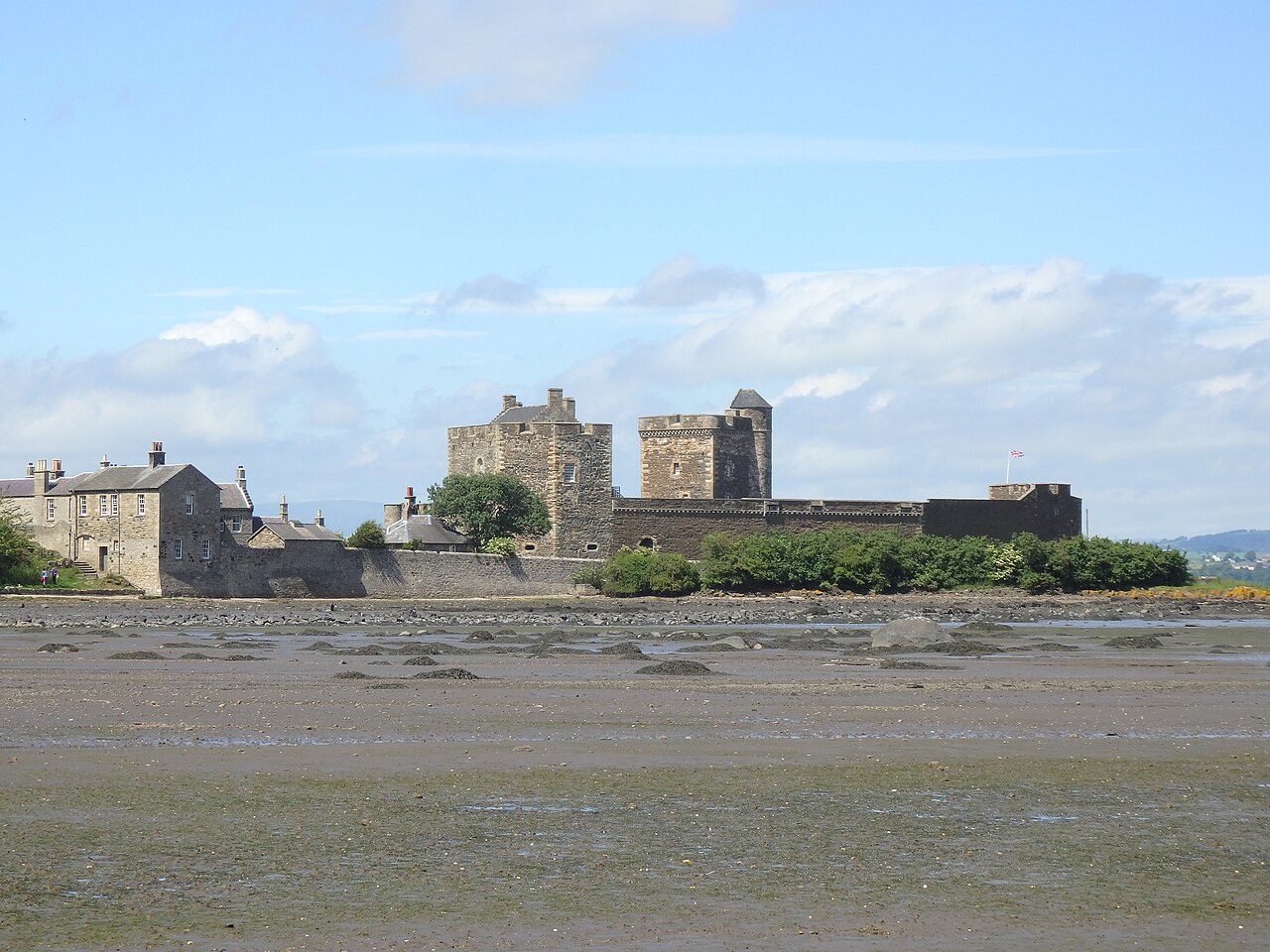
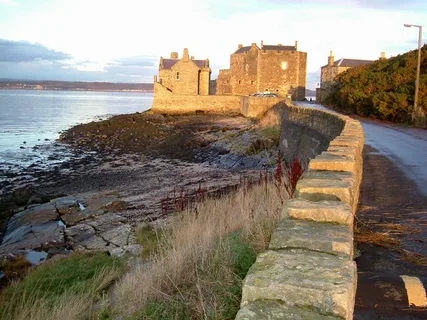
Its profile on the promontory — pointed bow to the north, square stern to the south, central tower rising like a mast — inspired the enduring nickname that captures the castle's character better than any description: the ship that never sailed.
Chronology
A major event, transition, or transformation marks almost every century of Blackness Castle's existence.
Sir George Crichton builds Blackness as a strategic stronghold near the port serving Linlithgow. Its rocky promontory position makes it naturally defensive, and its silhouette — extended into the Forth like the prow of a ship — becomes its defining characteristic.
King James II compels Sir George Crichton to surrender Blackness to the Scottish Crown. It immediately becomes one of the kingdom's most strategically important coastal sites, controlling sea access to Linlithgow and the upper Forth.
Engineered improvements led by James Hamilton of Finnart transform Blackness into one of Scotland's strongest artillery-focused fortifications. Thicker walls, enlarged gun ports, and modified tower profiles reflect how the site was reworked as gunpowder warfare advanced. These additions remain clearly legible today.
King James V formally transforms Blackness into a state prison and artillery fortification in response to English threats. The castle's grim lower cells and heavy defensive masonry mark the beginning of its long career as a place of detention for important political and religious prisoners.
Cardinal David Beaton, Archbishop of St Andrews and one of the most powerful churchmen in Scotland, is held prisoner at Blackness following a political crisis with the Scottish Parliament. His detention here marks the castle at the centre of the Reformation conflicts that would reshape Scotland.
Despite its strong walls, Blackness falls to Cromwell's forces after bombardment from land and sea during the English invasion of Scotland. The damage is extensive but the core structure survives. After the Restoration it returns to military service, demonstrating the castle's enduring strategic value.
During the period of religious repression known as "the Killing Time," many Covenanters — Presbyterians who refused to accept royal authority over the church — are imprisoned at Blackness. Their stories form one of the most poignant chapters in the castle's long history as a place of confinement.
For long periods Blackness functions as a state prison and eventually as an ammunition depot, with 19th-century military additions built around the core medieval structure. During Britain's wars with France, Spain, and the newly independent United States, it also serves as a prisoner-of-war camp.
Following World War I, Blackness Castle is decommissioned from military use and placed under state care. Extensive restoration works begin, and the castle opens to the public. Today, managed by Historic Environment Scotland, its architecture still communicates its military purpose with clarity across the centuries.
Architectural Reading Guide
One of the best ways to appreciate Blackness Castle is to read it in layers. The earliest fabric establishes a medieval enclosure with tower protection, while later interventions reveal adaptation to gunpowder warfare. Thicker sections of wall, enlarged gun ports, and modified tower profiles all show how the site was reworked as artillery technology advanced.
The entrance defences are especially instructive. The angular approach and controlled access route were designed to slow attackers and expose them to defensive positions. This practical military logic remains fully legible for modern visitors — making Blackness not only a scenic landmark but also a clear teaching example of defensive design across different eras.
From the courtyard level, you can compare the relative height and projection of each tower and imagine lines of movement for guards and prisoners. From the upper positions, the broader context of the Forth as a strategic waterway becomes apparent, explaining every major decision in the castle's construction history.
The central keep and basic enclosure wall represent the castle's 15th-century origins — straightforward defensive architecture designed for an era before gunpowder dominated siege tactics.
The widened walls, lowered gun ports, and modified tower profiles of the 16th century show how the castle was systematically upgraded to mount and withstand cannon fire.
The confined lower cells, reinforced gates, and later 19th-century depot buildings tell the story of the castle's long role as a place of confinement and military logistics.
The angular, controlled access route was designed to expose attackers to defensive fire at multiple points simultaneously — a classic feature of artillery-era fortification design.
Why It Matters
The castle's story mirrors shifts in Scottish and British national priorities across five centuries of political change.
Blackness Castle is closely linked to broader Scottish and British political history. Its shifts in function — from royal residence to fortress, state prison, garrison, and supply point — mirror shifts in national priorities: royal authority, wartime defence, the custody of important prisoners, and military logistics.
For visitors pairing it with Edinburgh or Linlithgow Palace, Blackness explains how coastal fortresses, inland royal centres, and transport routes once formed an interconnected historical landscape rather than isolated monuments. The castle was never purely decorative or ceremonial — it was always functional, always practical, and always connected to the events shaping Scotland.
The Forth estuary itself was Scotland's most important strategic waterway for centuries, carrying trade, military supplies, and royal travel between Edinburgh, Stirling, St Andrews, and the wider North Sea world. Blackness stood guard at a critical point in this network throughout its active life.
Visiting with Edinburgh or Linlithgow
When paired with Edinburgh Castle, Holyrood Palace, and Linlithgow Palace, Blackness Castle helps explain how coastal fortresses, inland royal centres, and transport routes formed an interconnected historical landscape. The three sites together tell the story of a medieval kingdom managing defence, power, and wealth across a compact but strategically complex geography.
Why Historians Value Blackness
Blackness Castle combines a rare ship-like coastal profile, surviving artillery architecture, and evidence of multiple historical roles in a single compact site. Its layout allows visitors to read military design decisions directly in stone — making it as useful as a teaching resource as it is compelling as a landscape.